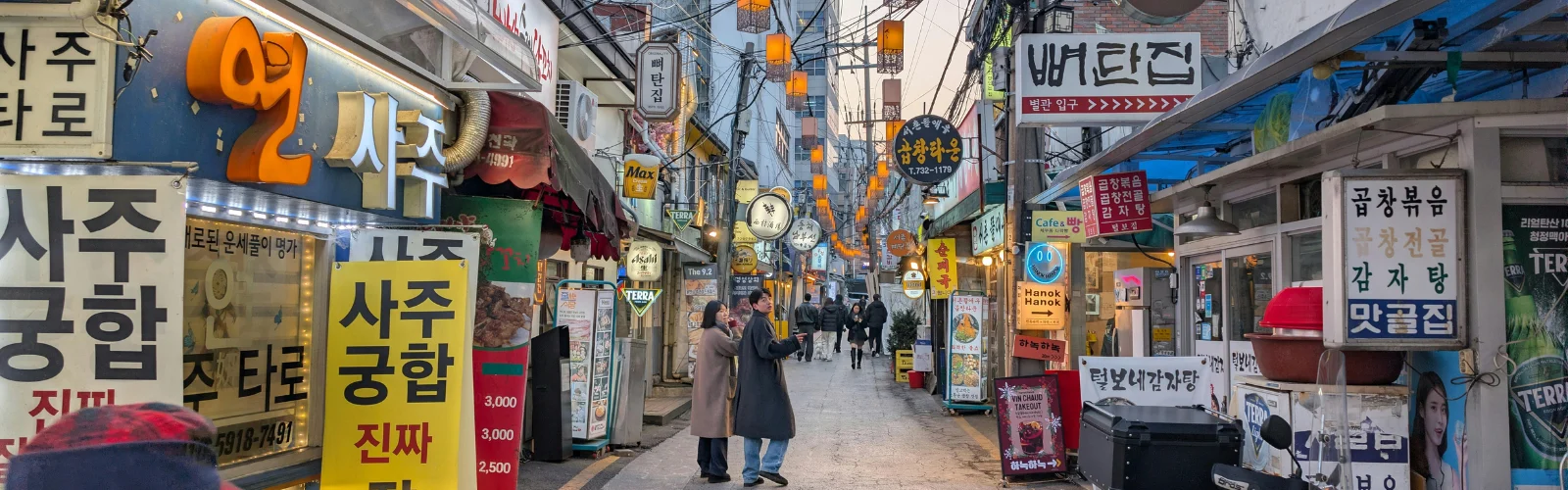
With each season comes a new opportunity to discover something different and unique about Seoul.
Spring, for example, offers the most beautifully photogenic views of cherry blossoms and mild weather to enjoy days spent outdoors.
Another favourite is autumn when visitors can breathe deeply the crisp air of golden ginkgo trees. Plus, declining crowds invites a slower pace for exploring neighbourhoods like Bukchon or taking a hike outside the city.
Sunshine lovers might not mind the fierce humidity, which makes for an intense festival season if you have the stamina to enjoy the seasonal line up of events.
December to February brings a classic cold winter that transforms Seoul into a minimalist painting of bare trees and occasional snow. Despite the lower temperature, the city remains just as magical.
Things to see and do in Seoul
Myeongdong Street Food Crawl
At the top of the list (as it should be, for anyone who appreciates delicious food) is the Myeongdong Street Food Crawl.
Loud, messy, and unforgettable, this is where you can indulge in spicy rice cakes known as tteokbokki and hotteok, which are sweet, syrup-filled pancakes. Arrive hungry and leave satisfied.
Namsan Seoul Tower
If you don’t mind something of a touristy locale, N Seoul Tower (also known as Namsan Tower) is popular for a reason.
Travel up Namsam Mountain by cable car for panoramic views of the city, which are even better at sunset as you get to experience Seoul flipping on the lights of a vibrant night life.
Gyeongbokgung Palace
Built in 1395, Gyeongbokgung Palace is a not-to-miss landmark with travel to Seoul as a touchstone of Korea’s royal history.
Head there in the morning to mitigate crowds and witness the changing of the guard ceremony.
Fun bonus: renting traditional clothing (a hanbok) gets you free entry and also creates a more immersive experience.
Night-time in Hongdae
Hongdae is one of Seoul’s most electric neighbourhoods. After dark, the streets come alive with performers, indie music, and artisanal cafes, it’s chaotic in the best possible way.
Travel to Seoul tips and etiquette
An unspoken, and lightly enforced social code of Korea helps to keep everything in Seoul running smoothly.
Specifically, public spaces call for extra respect. Be quiet on public transport and avoid disrupting others with your personal phone calls.
Be a little extra mindful of personal space. In crowded areas, be aware of others. If you’re entering someone’s home, take off your shoes.
In Korea, it is considered a gesture of respect to use both hands when giving or receiving times. This also applies to paying with cash—the gesture of passing it with both hands is one of respect.
Recommended places to stay
When choosing a place to stay, the neighbourhood you choose can really set the tone for much of your trip.
If it’s your first time in Seoul, here are some general recommendations of where to stay based on your preferences:
Myeongdong: A great choice for its central convenience.
Hongdae: A good choice for a younger and creative crowd seeking indie culture and vibrant nightlife.
Gangnam: If you’re heading to Korea on business, Gangnam (yes, like the song) is sleek, modern, and upscale.
Insadong: Perfect for anyone interested in a chill, culture-first stay. It is full of beautiful temples, galleries, and ta houses.
How to get around
With a reputation for efficiency, Seoul’s public transport is a solid option for travellers. Subways are clean and punctual, and even display signs in English. The bus is slightly more complex, but is still a very comprehensive system.
Taxis are affordable compared to other large international cities, but might be trickier to navigate and won’t guarantee English service.
You can use a T-money card for subways, buses, and even taxies, and pick them up at any convenience store.
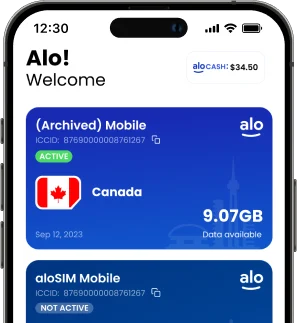
Use a South Korea eSIM for low-cost data on the go. It’s perfect for translation apps, Google Maps, browsing the web, and more.
Currency information and cost of living
Seoul isn’t outrageously expensive (but it’s not exactly a budget destination either). Spending with the Korean Won (KRW), conversion looks approximately like:
USD Conversion: $1 USD = 1,300 KRW
CAD Conversion: $1 CAD = 950 KRW
EUR Conversion: $1 EUR = 1,400 KRW
Visitors can anticipate spending:
- 3,000-7,000 KRW on street food
- 8,000-15,000 KRW on causal meals
- 4,000 KRW on a coffee
- 1,400 KRW for the subway
A mid-range hotel will likely cost between $80-150 USD per night.
It’s good to have cash on hand for small vendors but credit cards are a safe bet with travel to Seoul as they are widely accepted.
Other helpful information to travel to Seoul
Visas
Visas are not required for most travellers, including those from the USA, Canada, and the EU, who are visiting for stays shorter than 90 days.
That being said, you might need to apply for a K-ETA (Korea Electronic Travel Authorization) before you arrive. It’s an easy process and you can check the requirements via the South Korean government website.
Tax-free shopping in Seoul
Tourists can enjoy VAT refunds (of around 10%) on eligible purchases. Just look for the “Tax Free” signs while shopping and you’ll be able to claim instant discounts at check or claim refunds once at the airport.
Food culture
Good news for travel budgeting: tipping is not a part of Korean culture. Plus, meals are often meant to be shared. Larger portions with side dishes are considered part of the dining experience and do not cost extra.
If you’re ready to enjoy a city with a unique rhythm and so much to offer, Seoul should definitely be top of your travel list!