
Among being famous for its beauty and efficiency, Japan is also recognized as having a culture based deeply on respect.
If you’re planning to travel to Japan in 2026, understanding local etiquette is as important as having your passport (essential).
Recently, news broke that the annual cherry blossom festival in Fuji Kawaguchiko (Yamanashi Prefecture) was cancelled due to over-tourism, and worse, including a number of abhorrent behaviours displayed by visitors.
Reports cited multiple accounts of trespassing, blocking traffic, littering, and even defecating in resident’s yards as among the reasons for cancelling.
Unfortunately, this is far from an outlier and similar crowd-management concerns have been raised in other regions during peak cherry blossom season.
The closures should serve as a reminder that, while Japan welcomes visitors, respect for rules and one another are paramount.
Here’s what else you need to know when it comes to understanding Japanese etiquette as a tourist.
Quiet is polite
Calm is key when it comes to a preferred demeanour in public spaces of Japan. It’s not acceptable to shout at someone down the street, to listen to your music without headphones, or use speakerphone while on the train.
In fact, public transportation is an especially quiet space. Most commuters scroll silently or even nap.
Etiquette for line ups
Orderly lines are the norm when waiting for trains, elevators, or for a bowl at a local ramen shop. No cutsies! Even unintentional cutting is considered quite rude.
If you’re unsure, check for floor markings which normally appear to indicate where queues should form.
Don’t eat while on the go
Eating while walking is discouraged in many cities in Japan, especially Kyoto and Tokyo. It’s okay to stand near a stall if you’ve purchased some street food though; just be sure not to leave any trash behind when you’re finished.
It’s also worth noting that public garbage cans in Japan are few and far between. If needed, carry a small bag with you to carry your trash. It is proper etiquette to bring your trash back to your hotel to dispose of properly.
Be aware of photography boundaries
With the rise of social media, anyone feels entitled to get the shot they want, even if it means:
- Trespassing on private property
- Blocking traffic
- Photographing geisha in Kyoto without express permission
These behaviours have become a growing concern in many popular destinations, especially in historic areas that already struggle with over-tourism. Some advice: just don’t be that person.
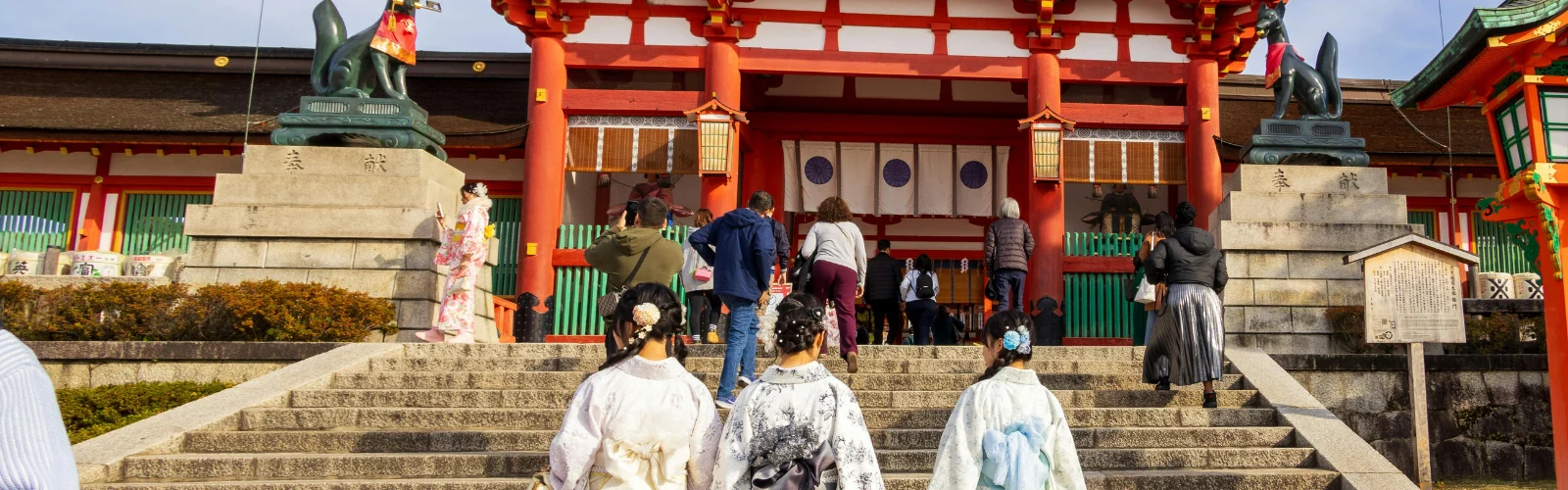
Shrine and temple etiquette
If you take an excursion to a temple or shrine follow these rules to avoid unintentional disrespect:
- Bow before entering torii gates
- Note that the center path is sacred, walk down the side
- Wash your hands at the purification fountain
- Dress modestly
- Speak quietly
- Follow any signage to the letter
Shoes off!
In many venues throughout Japan, it’s appropriate to remove your shoes, including at traditional accommodations, temples, and some restaurants.
Some places offer slippers, but to be prepared, be sure to have clean socks, and remember that bathroom slippers stay in the bathroom.
Bring cash
Despite its hyper modern reputation, cash is still widely used in Japan, so it’s worth carrying some along with you when you travel.
Small shops and festivals will expect yen for payment while most convenience stores and train stations will likely accept cards and digital wallets.
Cherry blossom season etiquette
If you are lucky enough to attend Sakura (Cherry Blossom Season), be mindful of the fragility of the magic. Never shake the trees or attempt to break branches.
Clean up after yourself and follow the rules to protect the experience for others and for future generations.
By following these simple yet profound etiquette tips, you can enjoy your trip with peace of mind while showing respect for Japan’s beautiful culture.
Staying connected in Japan
There are countless fun activities, delicious food spots, and beautiful landmarks to visit during your trip to Japan. The best and most affordable way to stay connected in Japan to see (and taste) them all is with an eSIM for Japan.
Be sure to install an eSIM before you leave for your trip so you can have fast mobile data access on the go throughout your trip!