

It’s 2025, and European travel seems to be right at the top of every traveller’s list. This is where a downloadable European SIM card (eSIM) swoops in to solve all your problems.
With every offering from cozy countrysides to bustling downtowns, Europe remains the gold standard for all types of travel.
Choosing an eSIM for your Europe trip rather than sticking with your provider’s international plan will allow you to stay connected across borders at a reasonable rate. But how can you choose the best European SIM card?
Here’s a breakdown of what really matters when choosing a European SIM card — whether you’re backpacking across regions or staying put in a single city.
Network coverage is everything
Despite the romance of the notion of Europe, remember that it’s not just one place. The continent is host to dozens of countries, each with its own mobile network.
On first glance, you’ll find SIM cards from Vodaphone, Orange, Deutsche Telekom, Bouygues Telecom, and others. Keep in mind that the SIM you’re going to use needs to partner with at least one of these providers in each country — otherwise, you run the risk of patchy data or dropped calls.
Note which SIM cards offer multi-network access with the ability to switch to the strongest signal available across given locations. You don’t want to find yourself missing the views because you’re stuck trying to refresh your map app.
This is a primary reason why eSIMs are a chosen favourite — they automatically switch between the strongest carrier network to provide you with the best connection.
Check the included countries
Some SIM cards that claim to be for “Europe” only actually offer coverage in a handful of countries. If you have big plans to party in Paris, Prague, and Portugal all on one trip, then make sure your SIM can keep you connected through all the countries on your itinerary.
Regional plans from aloSIM, for example, cover multiple countries within a geographic area, but also have options for not-so-obvious destinations, including Croatia, Estonia, or Slovenia.
Unlimited data or bust
Plan your travel budget to include the amount of data that will fit your needs. Do you need unlimited data? Possibly! Will you be streaming, using Zoom, uploading daily travel vlogs, or using your phone as a hotspot?
Unlimited might be the answer, but remember that some SIM card plans come with unexpected fine print, like speed caps after you pass a certain threshold.
In reality, most travellers find that a 5GB or 10GB plan is more than enough data for navigation, messaging, booking tickets, and some light social media use.
Find you need more? With aloSIM, you can top up your eSIM whenever you need for as much additional data you might require.
Installing and activating your European SIM card
You definitely don’t want to land in Brussels and spend your first hour trying to decipher instructions in a train station. If you go the physical SIM card route, make sure you clearly understand the installation and activation instructions before making your purchase.
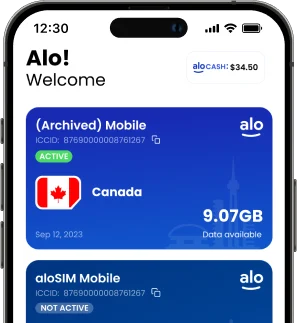
If you go with an eSIM, you’ll be relieved to know that they’re easy to activate and install — even before your trip. You can download the aloSIM app instantly and activate your eSIM data plan with just one tap once you’re ready to go.
Access to customer support
Hope for the best, but prepare for the worst, right?
While it’s unlikely you’ll run into issues with your downloadable European SIM card, network issues do occur from time to time. You don’t want to find yourself stranded in Europe with your data not working, while struggling to speak to a real human being from customer support.
Invest in an eSIM provider that offers 24/7 support, and make it a point to read reviews before buying. This can save you a lot of trouble down the road if you do happen to run into any issues.
So there you have it! It can feel a little overwhelming to know where to start when deciding on the best European SIM card for your trip. If you look out for these small details though, you can confidently pick the best option for your needs!