

It might be one of the most common travel questions: will my phone work abroad? And it usually only occurs to you to ask the night before your flight.
You might suddenly wonder if you’ll be able to stay connected. The answer is most likely “yes,” though it does depend on a few important factors.
Here’s what actually determines if your phone will work while you’re in another country.
Is your phone unlocked?
Potentially the biggest factor, any device that is carrier-locked will usually only work with its original provider. This means that you could get saddled with expensive roaming fees and not be able to take advantage of a local SIM or eSIM.
If your phone is unlocked, it can connect to carriers abroad. Contact your current carrier to confirm if you’re unsure. Many providers will unlock your device if it’s paid off.
International options are limited without an unlocked phone.
Does your phone support eSIM?
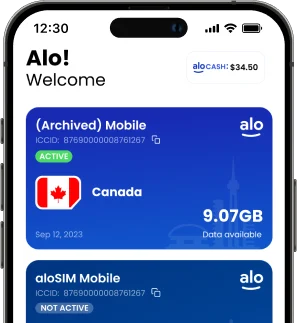
Fortunately, many modern devices do support eSIMs, which means you can download a digital data plan without swapping out a physical SIM card. In fact, you can even install a travel eSIM before you leave home. Your eSIM data plan would then activate upon your arrival at your destination.
Eliminating the need to find a SIM card kiosk at the airport saves time and stress. With aloSIM, you can install the app from anywhere and purchase a plan for your destination while you pack. It’s the easiest and most cost-effective way to get mobile data abroad.
Devices without eSIM functionality can alternatively go with a physical travel SIM card, or may have to settle for paying roaming fees.
Network compatibility at your destination
Interestingly, not all types of phones support every cellular band available worldwide. However, most newer smartphones do work across multiple regions. Keep in mind that budget phones and older models may not support all international frequencies.
Before travelling, check:
- Model of your device
- Supported cellular brands
- Available networks of destination country
You can trust that most flagship iPhones, Samsung Galaxy devices, and Google Pixels will work internationally, but it’s worth confirming if your device is a few years old.
Roaming settings and costs
Remember that even if your phone is technically functional while travelling, roaming charges can add up quickly. In fact, some carriers even charge daily fees while other companies will bill per megabyte of data used.
Pre-Travel Checklist:
- Check international roaming rates with your provider
- Disable data roaming
- Review the lower priced prepaid eSIM options
Don’t fall into the trap of assuming that your phone isn’t working. The reality may very well be that your roaming is off or your usage is blocked. Investigate your devices settings to confirm.
Wi-Fi vs cellular data
No matter where your travels take you, you should be able to use your phone on Wi-Fi for any internet-based apps, even when cellular service is unavailable. This includes messaging apps, email, map apps and social media.
That being said, it can be limiting to rely solely on Wi-Fi. Public spaces like airports or cafés might offer Wi-Fi that’s unsecured or unreliable.
Having mobile data will give you more consistent access to necessary apps to navigate, secure rides, translate conversations or book accommodation.
So… will my phone work in another country?
In most cases, yes, your phone will work in another country if it’s unlocked, supports the right network bands, and is either roaming-enabled or equipped with a travel eSIM plan.