

So you’re on vacation overseas, patiently waiting for your friends to wake up while you sip coffee in the café across the street. You find yourself staring at your phone, yearning to post on social media, but unsure if you should risk the potentially sketchy wifi or burn through your mobile data plan.
Sound familiar? If you’re stuck weighing which choice you should rely upon while roaming the world — mobile data vs wi-fi — here are a few factors to consider.
Mobile data vs WiFi
Mobile data is essentially the internet you access through your phone carrier. It’s delivered across cell towers and requires your device to have an eSIM or a SIM card. Typically, mobile data works anywhere you have a signal.
Wi-Fi, on the other hand, is how you can connect your device to the internet through a local wireless network. While travelling, this can come from your hotel, the airport, or the local café’s router. While wi-fi doesn’t require cell towers, it does rely on being physically close to a connection point to work.
The case for WiFi
In most cases of mobile data vs wi-fi, the latter tends to be both free to use and easy to find. These days, public wi-fi is generally available in airports, restaurants, hotels, and even some trains.
It’s perfectly fine to use for large downloads, streaming Netflix, or uploading that 4K drone footage from your latest travel adventure.
Here’s the catch: unfortunately, public wi-fi isn’t always safe. Hackers seem inclined to seek out unsecured networks, which allow them to snoop on your data, capture login credentials, and even inject malware.
Additionally, some regions only offer wi-fi that is painfully slow, unreliable, or comes with weird login walls that never work unless you already have a local phone number (looking at you, Europe).
Wi-Fi Pros:
- Free (or cheap)
- Great for heavy data use
- Available in most tourist destinations
Wi-Fi Cons:
- Risky security
- Often slow or unstable
- Not available everywhere (especially rural or remote areas)
The case for mobile data
Mobile data is the internet option with more freedom. Without needing to be tethered to a nearby router, you can access maps for navigating your trip, check out activity reviews, make restaurant reservations, and more.
There isn’t always a Starbucks around the corner with free wi-fi you can depend on. Not to mention, with an encrypted connection through your carrier, mobile data is much more secure than any public wi-fi network.
The downside? Mobile data through your regular carrier means roaming charges. If you’re travelling internationally and using your everyday, primary SIM card, your phone bill could skyrocket.
Mobile Data Pros:
- Reliable and secure
- Works almost everywhere
- Don’t need to hunt for wifi
- Perfect for navigation and communication
Mobile Data Cons:
- Can be expensive abroad (with your primary provider)
- Limited data packages from your mobile provider (unless you plan ahead with an eSIM)
What’s best for travellers?
If you’re just relaxing in your hotel room, maybe uploading a vlog about your travels, then the wi-fi is a great option — just be sure to use a VPN for safety. For everything else, mobile data wins, hands down.
Mobile data is faster, safer, and far more convenient than relying on wi-fi, given you can use it on the go. If you want to use your data while travelling but avoid international roaming costs, you can just use a travel eSIM.
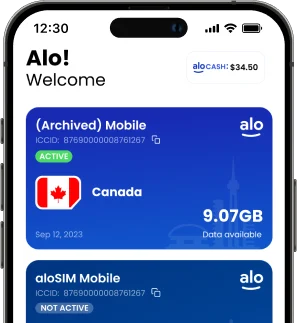
With an international eSIM from aloSIM, you can buy affordable local data plans for any destination you’ve been dreaming of, all with no roaming fees, no plastic SIMs, and instant setup. You can skip the wi-fi roulette and stay securely connected everywhere.